
Phoenix Lawn Edging Services
Choose our expert lawn edging to give your yard a polished, professional look that stands out in your neighborhood—our durable, precise edging solutions keep your landscape tidy and beautiful all year long.
Get a Free QuoteOur Phoenix Landscaping & Yard Care Services
When to Schedule Lawn Edging in Phoenix, Arizona – Seasonal Guide
In Phoenix, Arizona, the best times to schedule lawn edging are typically during the cooler months of late fall through early spring. The region’s unique desert climate—characterized by hot, dry summers and mild winters—means that lawn care routines differ from those in other parts of the country. For neighborhoods like Arcadia, Ahwatukee, and around South Mountain Park, edging is most effective when soil temperatures are moderate and grass growth is steady, usually from October to April. This timing helps avoid the intense summer heat, which can stress both turf and soil, and ensures crisp, clean edges that last through the growing season.
Local environmental factors play a significant role in determining the optimal schedule for lawn edging. Phoenix’s low humidity, risk of drought, and alkaline soils require careful attention to moisture retention and soil health. Areas with dense shade from mature trees, such as those near Encanto Park, may need more frequent edging due to slower grass growth and increased leaf litter. Additionally, municipal guidelines and water restrictions—often updated on official city resources like the City of Sudbury website—can influence when and how often you should perform lawn maintenance.
Local Factors to Consider for Lawn Edging in Phoenix
- Tree density and shade coverage
- Soil type and compaction (common in desert landscapes)
- Seasonal precipitation and irrigation schedules
- Proximity to landmarks or high-traffic areas
- Municipal restrictions or neighborhood association guidelines
- Terrain variations, such as slopes or rocky ground
Benefits of Lawn Edging in Phoenix
Enhanced Curb Appeal
Weed Growth Prevention
Defined Landscape Borders
Low Maintenance Solutions
Increased Property Value
Professional Installation Expertise
Phoenix Lawn Edging Types

Brick Lawn Edging
-
Metal Landscape Edging
-
Plastic Lawn Borders
-
Natural Stone Edging
-
Concrete Curbing
-
Wooden Landscape Borders
-
Rubber Lawn Edging
Our Lawn Edging Process
Site Evaluation
Marking Edges
Cutting the Edge
Debris Removal
Final Inspection
Why Choose Phoenix Landscape Services
-
Phoenix Homeowners Trust Us
-
Expert Lawn Maintenance
-
Reliable Irrigation Solutions
-
Competitive Pricing
-
Professional Team
-
Satisfaction Guarantee
-
Personalized Service
Coordinating Lawn Edging Services with Phoenix Public Works and Engineering
Lawn edging in Phoenix requires attention to how turf borders interact with public infrastructure, including curbs, sidewalks, gutters, and storm-drain inlets. The City of Phoenix manages right-of-way maintenance and debris control through its public works operations, and property owners should understand how edging debris—grass clippings, soil fragments, and decomposed granite—must be kept out of street gutters and curb inlets. When edging along public sidewalks or adjacent to city-maintained drainage channels, residents and property managers should verify whether the work encroaches on the public right-of-way. Green waste generated from edging operations, including turf trimmings and root material, must follow the city's organic waste collection guidelines. Contact the appropriate departments to confirm current disposal procedures and right-of-way boundaries before beginning edging work near public infrastructure.
- Keep all edging debris—clippings, soil, and root fragments—swept away from curb inlets and storm-drain openings
- Verify right-of-way boundaries before edging turf that borders city sidewalks or drainage easements
- Follow the city's green waste collection rules for disposal of accumulated turf and root material
- Coordinate with engineering staff if edging work involves grade changes near drainage flow paths
Phoenix Public Works Department
200 W. Washington St., Phoenix, AZ 85003
Official Website: Phoenix Public Works Department
Phoenix City Engineer Division
200 W. Washington St., Phoenix, AZ 85003
Official Website: Phoenix City Engineer Division
How Phoenix's Low-Desert Heat and Alkaline Soils Affect Lawn Edging
Phoenix sits in USDA Hardiness Zone 10a, a low-desert environment where summer temperatures routinely exceed 110°F and soils are predominantly alkaline sandy loam, often underlain by caliche at varying depths. These conditions directly influence lawn edging outcomes. Bermudagrass—the dominant warm-season turf in the Phoenix metro—spreads aggressively through stolons and rhizomes, meaning edges along hardscape, driveways, and planting beds require frequent re-cutting to maintain clean lines. The University of Arizona Cooperative Extension notes that bermudagrass growth accelerates during the intense summer months, demanding more frequent edging cycles from roughly April through September.
- Caliche layers near the surface can deflect edging blades and require adjusted cutting depth to avoid equipment damage
- Reflected heat from block walls, concrete driveways, and decorative rock intensifies turf stress along edges, often causing uneven growth patterns at hardscape borders
- Alkaline soils (pH commonly above 7.5) contribute to salt accumulation along irrigated turf margins, which can create crusty soil conditions that complicate clean edge cuts
- Irrigation overspray along turf borders frequently encourages bermudagrass runners to creep into adjacent gravel beds, flower beds, and sidewalk joints, increasing the frequency of corrective edging
Monsoon-season runoff, typically from July through September, can erode exposed soil along freshly edged borders, making stabilization and debris management essential during this period. The Arizona Department of Water Resources encourages efficient irrigation practices that reduce overspray—a factor that directly limits unwanted turf encroachment at lawn edges.
Stormwater Compliance and Municipal Code Considerations for Phoenix Lawn Edging
Lawn edging generates soil particles, organic debris, and loose clippings that can migrate into Phoenix's municipal separate storm sewer system (MS4). Under the Clean Water Act and Arizona DEQ Phase II MS4 requirements, preventing pollutant discharge into storm drains is a shared responsibility between property owners and service providers. Edging operations adjacent to curb-and-gutter systems should include immediate sweeping or collection of displaced material to prevent it from entering drainage infrastructure.
- All clippings, soil, and root debris must be swept or vacuumed from hardscape surfaces immediately after edging—never hosed into the street or gutter
- Properties adjacent to washes, retention basins, or flood-control channels should maintain a stable turf edge to prevent erosion and sediment migration during monsoon events
- The Phoenix Office of Environmental Programs oversees local stormwater compliance, and property managers of commercial sites should verify that landscape maintenance contracts include stormwater best management practices
Phoenix Office of Environmental Programs
200 W. Washington St., Phoenix, AZ 85003
Official Website: Phoenix Office of Environmental Programs
Phoenix's municipal code addresses property maintenance standards that include keeping sidewalks, curbs, and public-facing frontage clear of vegetation overgrowth. Neglected lawn edges that encroach onto sidewalks or obstruct pedestrian access may trigger code compliance action. Residents should verify current property maintenance requirements with the city to avoid violations.
Timing and Professional Methods for Lawn Edging in Phoenix's Climate
Effective lawn edging in Phoenix follows the growth cycle of bermudagrass and, where applicable, overseeded winter ryegrass. The Turfgrass Maintenance Guide for Low Elevation Arizona provides regionally calibrated guidance on turf management that informs edging schedules. During the primary bermudagrass growing season—April through October—edging is typically performed every one to two weeks to keep pace with aggressive lateral growth. During winter, properties overseeded with perennial ryegrass may require edging on a similar cycle, though growth rates are slower.
- Mechanical blade edgers produce the cleanest vertical cuts along concrete and hardscape borders, maintaining a defined separation between turf and non-turf surfaces
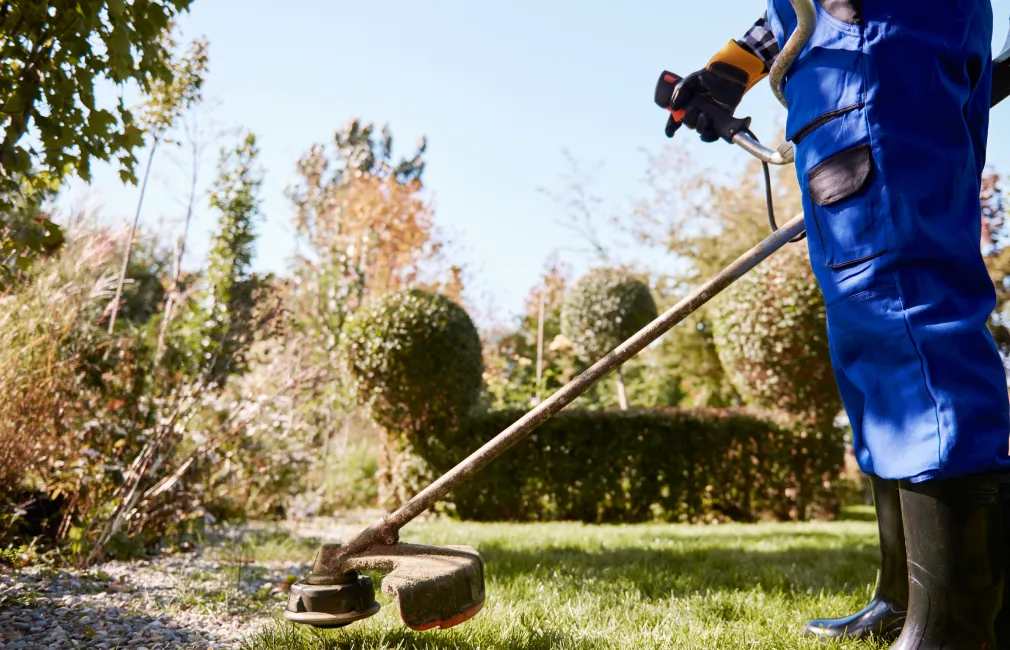
- String trimmers are commonly used for bed edges and irregular borders but require careful depth control to avoid scalping turf crowns
- Early morning edging (before 10:00 a.m.) reduces heat stress on both workers and freshly cut turf margins during summer months
- Post-irrigation timing: edging approximately 24 hours after irrigation allows soil to firm slightly, producing cleaner cuts and reducing soil displacement
- Pre-monsoon edge stabilization: reinforcing turf borders before the July–September monsoon season helps prevent washout along exposed soil lines
Edging depth should be sufficient to sever bermudagrass stolons and rhizomes—commonly around 2 to 3 inches—without disturbing irrigation lines or drip tubing that may run near hardscape borders. Operators should confirm the location of shallow irrigation components before cutting.
What Neighborhoods Do We Serve Throughout Phoenix, AZ?
- Arcadia — Mature irrigated lots with established bermudagrass lawns and extensive hardscape borders along driveways and block walls require frequent edging to control aggressive stolon spread
- Desert Ridge — Newer subdivision lots often feature compact turf panels bordered by decorative rock and concrete, where reflected heat accelerates edge encroachment into gravel beds
- Encanto-Palmcroft — Historic properties with large turf areas and older irrigation systems demand careful edging around tree wells, raised planting beds, and aging sidewalk joints
- Ahwatukee Foothills — Sloped lots near South Mountain create drainage-sensitive edging conditions, particularly during monsoon runoff events along retention basin borders
- Maryvale — Established residential blocks with curb-adjacent turf strips require consistent edging to maintain sidewalk clearance and prevent code compliance issues
- North Gateway — Properties near desert preserve boundaries often transition between irrigated turf and native desert, requiring precise edge definition to prevent turf migration into protected areas